

Qingling Commercial Electric Truck: A New Direction for Urban Business Transport
A delivery truck can spend half its day stopping. One warehouse, three customer addresses, a loading bay, then another run across town. Traffic gets in the way. Fuel keeps getting used, even when the truck barely moves.
For businesses doing this every day, the running costs add up. An electric truck offers another way to handle those journeys. The Qingling Commercial Electric Truck is one model worth looking into, though the actual specifications matter far more than the name. XL Motor can provide details about the available vehicle.
Why Electric Trucks Are Worth Considering for City Deliveries
City work is rarely one long drive. There are stops everywhere, short distances between jobs and plenty of waiting around.
Electric trucks run on battery power. No tailpipe emissions while driving, and usually less noise at low speeds. That can be useful around offices, shops and residential areas, particularly for businesses making deliveries early in the morning.
Running costs need a closer look, though. Electricity may be cheaper than diesel for a particular route. It may not be, depending on the tariff, charging setup and amount of energy the truck uses.
What Changes When a Fleet Goes Electric?
The biggest change might happen before the truck even leaves the depot. Charging takes time. Diesel refuelling is usually quick, whereas an electric truck needs a charging slot and enough time connected to the charger. That has to fit somewhere in the schedule.
A business that parks its vehicles overnight has an advantage. Charge them while nobody is using them. Simple enough.
But what about a driver who gets an extra delivery at the end of the day, or a route that changes without warning? That needs planning. An EV lorry will not suit every operation, and there is little point pretending otherwise.
Choosing a Qingling Commercial Electric Truck for the Work
First, look at the load. Building supplies, cartons, tools and heavy equipment all create different demands. Some goods need an enclosed body; others are awkward to fit into one. A truck delivering packaged products around the city may have little in common with one carrying materials to construction sites.
Payload and Cargo Space Matter
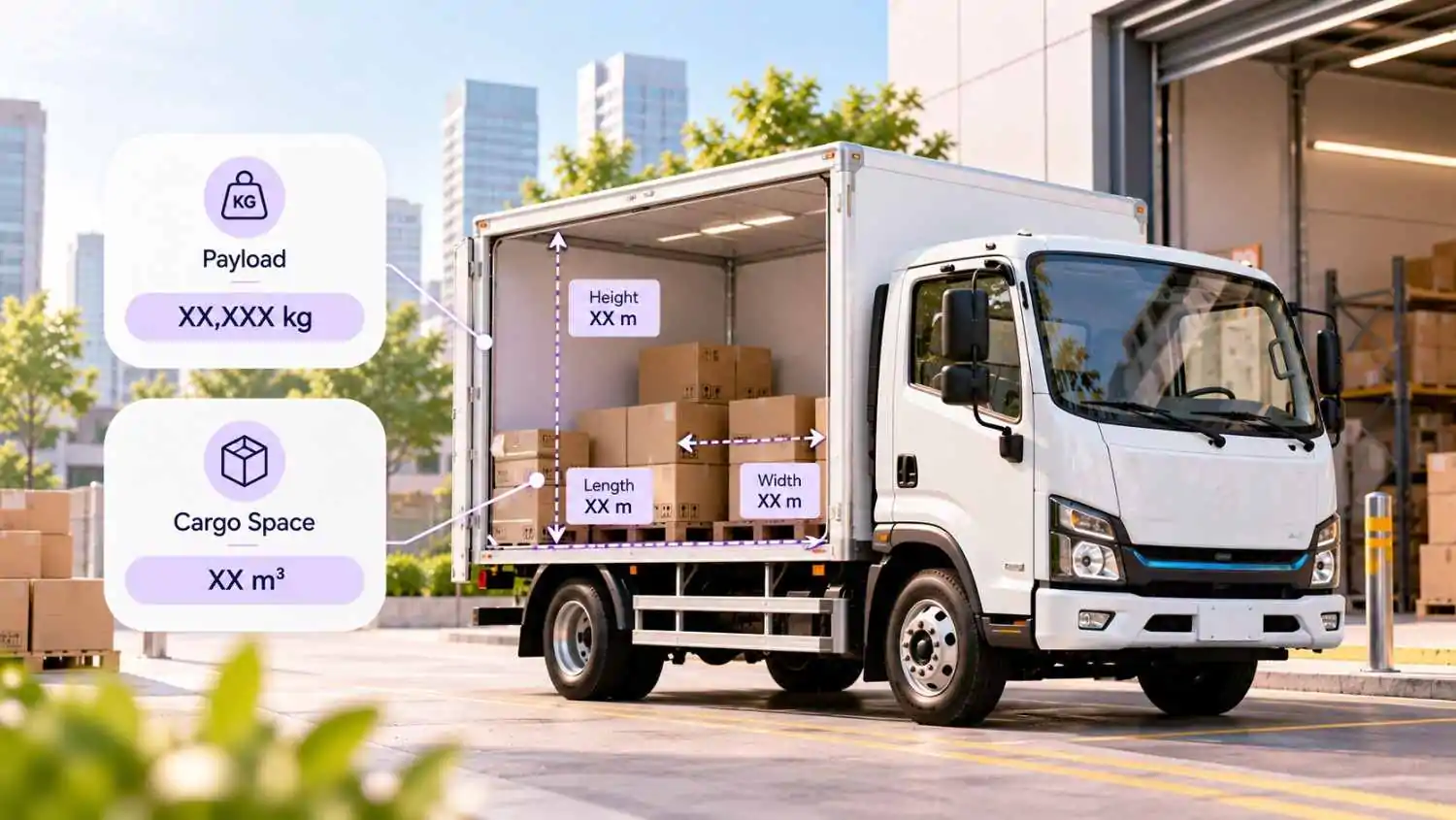
A bigger cargo bed sounds useful until the truck cannot legally carry the weight you need. Payload is the weight the vehicle can carry. Gross vehicle weight includes the vehicle itself, occupants and cargo. Two different figures, and both deserve attention.
Battery weight and body configuration affect the available payload, too. So check the exact Qingling variant rather than relying on figures from a similar-looking model.
Ask for the permitted payload, gross vehicle weight and cargo dimensions in writing. If the truck needs a particular body or equipment fitted, confirm how that affects the final figures.
Range and Charging: Can the Truck Finish the Working Day?
A published range is not a promise of what happens on your route. Heavy loads use energy. So do air conditioning, driving conditions and repeated stops. A truck that looks suitable on paper may perform differently once it is carrying goods through busy streets all day.
Take a normal working day and map it out. Depot to first delivery, then the next stop, then the next. Include the return journey. Add some room for delays and detours.
Charging needs its own check. Businesses with depot parking might install chargers, provided the electrical supply and site allow it. Public charging is another option, but location, availability and charging speed all matter.
Ask how long the specific model takes to charge. Then look at the schedule. If the truck spends most of the night parked, charging may be easy to manage. If it needs to be back on the road quickly, the calculation changes.
Electric or Diesel: Which Makes More Sense?
Neither wins in every situation. A business covering predictable city routes has different needs from one travelling long distances with heavy cargo.
| Consideration | Electric truck | Diesel truck |
| Energy supply | Needs charging access | Uses diesel |
| Tailpipe emissions | None while driving | Produces exhaust emissions |
| Maintenance | No engine oil changes; other servicing is still required | Includes engine-related servicing |
| Time needed | Charging must fit the schedule | Refuelling is generally quicker |
| Running costs | Depend on electricity rates and usage | Depend on diesel prices and usage |
Do not compare the purchase prices and stop there. Insurance, servicing, energy costs and charging equipment belong in the calculation. So does the time a vehicle spends unavailable for work.
A cheaper truck is not necessarily cheaper to run. Equally, projected savings mean little when they are based on mileage your business never covers.
Buying a Commercial Vehicle: What Should You Check?
Start with the working day. How much does the truck carry? How far does it travel? When does it return to the depot?
These are the questions that make buying a commercial vehicle less confusing. The answers narrow down the options before you spend time comparing individual models.
- Payload: Can it carry the usual load?
- Range: Will it finish the route with a reasonable reserve?
- Charging: Is there a suitable place to charge it?
- Warranty: What does the battery coverage include?
- Servicing: Are parts and after-sales support available?
For a commercial vehicle purchase, get a written quotation and verified specifications. XL Motor can be asked about the Qingling model currently available, including its warranty and servicing arrangements. Check that the information applies to the exact variant being offered.
Would a Van Work Better for a Small Business?

Sometimes, yes. Not every business needs a truck. A retailer delivering small orders or a technician carrying tools might get more use out of a van. The enclosed space keeps goods out of the rain, and smaller items can be easier to organise. Bulky equipment is another matter, particularly when the door opening or cargo area is too small.
Buying a van for a small business should come down to what gets carried on an ordinary day. There is little sense in paying for a large vehicle that spends most of its time half-empty. Just as there is little sense in choosing a small one and struggling to fit every order inside.
Is the Qingling Commercial Electric Truck Right for Your Business?
It could be. That depends on the load, the route and where the truck can charge. Get the actual specifications before deciding. Check the payload, usable range, charging time, warranty and servicing arrangements.
Ask XL Motor for the details of the available Qingling model, then compare them with the work your business needs to get done. No complicated formula is needed. The truck must carry the goods, complete the route and be ready when the next working day begins. If it can do all three without pushing up costs elsewhere, it deserves a closer look.
